How Do Plumbers Find a Sewer Line Problem?

Short answer: A plumber finds a sewer line problem by figuring out which fixtures are backing up, opening the cleanout, and running a waterproof camera through the line. A locator then marks the exact spot above ground. If the camera can’t confirm a leak, they may use smoke, dye, sound, or pressure tests.
I spent more than 25 years as a plumber across Florida. How do plumbers find a sewer line problem? They start by checking the symptoms and inspecting the sewer line to identify the actual cause before recommending a repair. I’ve seen sewer backups in older neighborhoods, cast-iron failures near the coast, and roots tearing into pipes after storm season. I don’t run every job myself anymore, but I still go over the diagnostic approach with the licensed plumbers on our team. The wrong diagnosis is what turns a $500 cleaning into a $10,000 excavation.
A Tampa Job That Almost Became a Replacement
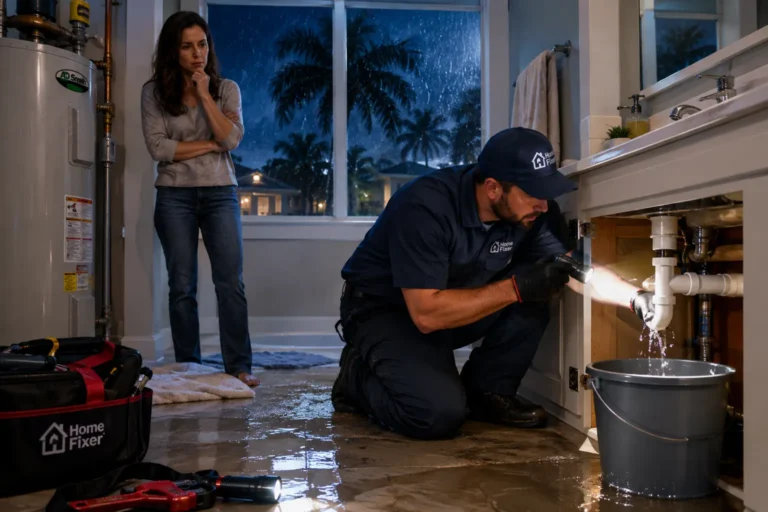
A homeowner in the Tampa area called us after two toilets backed up on the same morning. Another plumber had snaked the line twice in eight months, and the backup kept coming back.
Here’s what our team did:
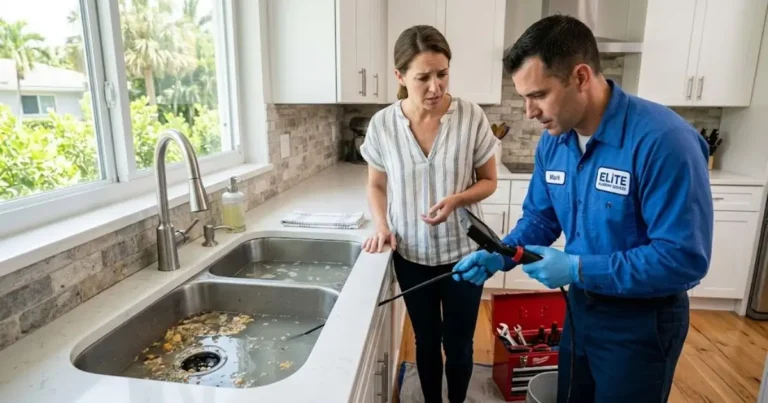
- The downstairs toilet gurgled whenever the washing machine drained. That pointed to the main line, not one fixture.
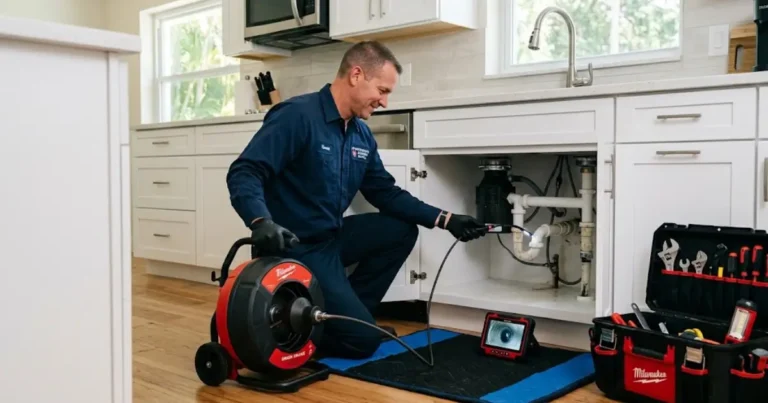
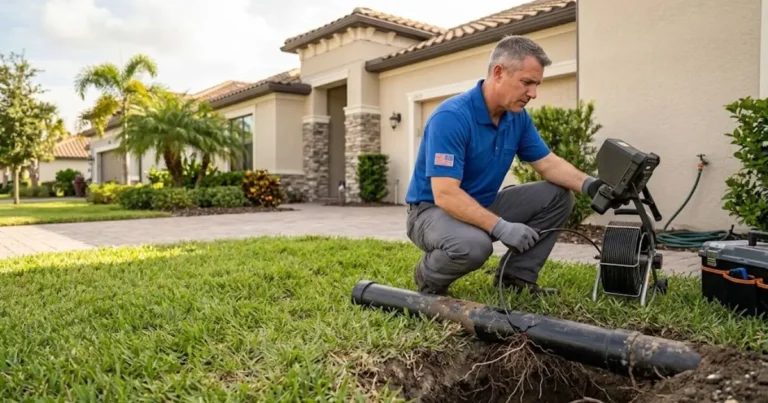
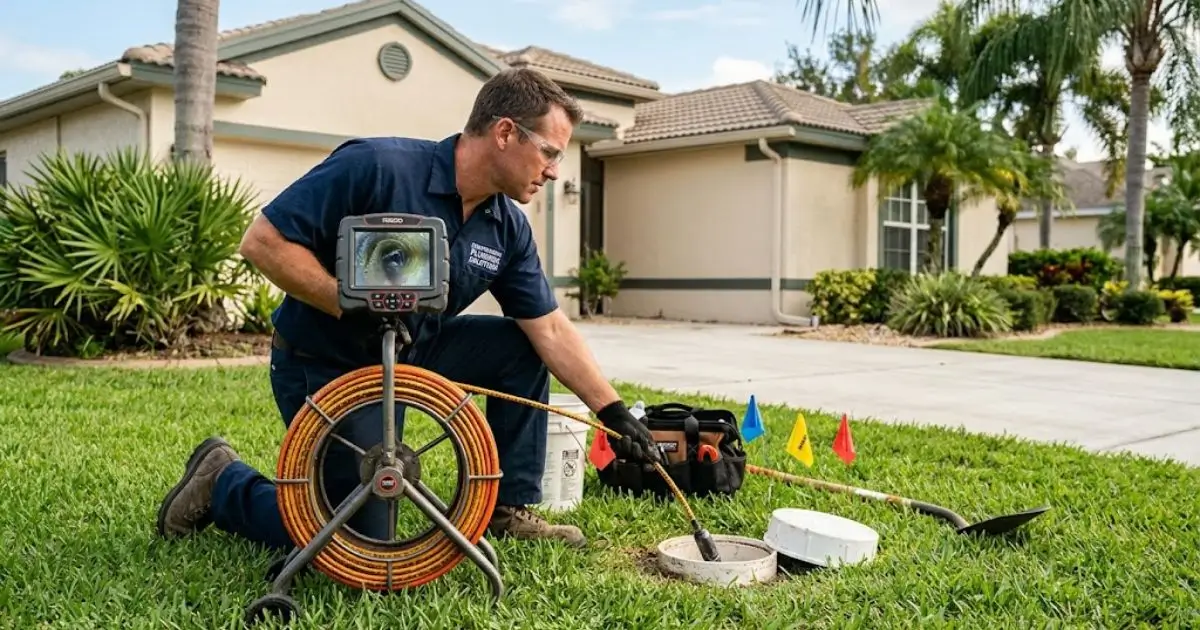
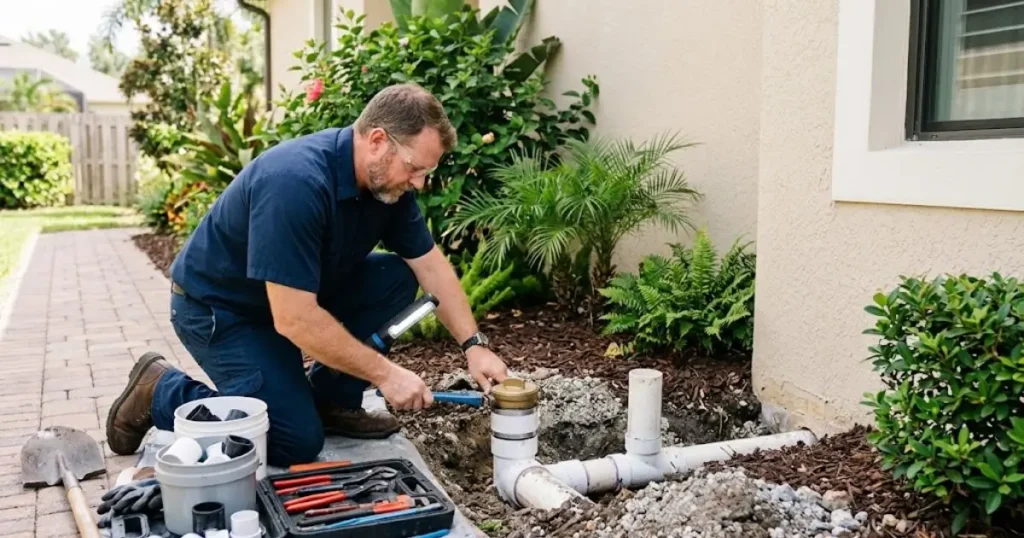
- The outside cleanout was easy to reach, so we ran the camera from there.
- About 38 feet in, fine roots filled roughly 40% of the pipe.
- The locator put the problem near a mature oak, about 4 feet down.
- We hydro-jetted the roots out and re-ran the camera. The pipe wall was still sound.
No replacement was needed. The fix was root removal and a maintenance plan. Snaking twice had only cut a path through the roots. Nobody had looked at the pipe.
The 5 Steps Plumbers Use
A good plumber doesn’t start by quoting a new sewer line. They narrow the problem down first.
| 1. Check the fixtures | Runs the lowest drain, flushes toilets, listens for gurgling | One fixture, or the main line |
| 2. Find the access point | Locates the cleanout or roof vent | A way in without pulling a toilet |
| 3. Run the camera | Feeds a self-leveling camera through the line and records it | Roots, grease, cracks, offsets, bellies, collapse |
| 4. Locate the defect | Tracks the camera’s transmitter with a receiver above ground | Depth and position in the yard, slab, or street |
| 5. Review and quote | Watches the video, measures the distance, then recommends a fix | Maintenance issue or structural repair |
A camera inspection usually runs about $125 to $500. Long runs, tight access, or a missing cleanout can push it higher.
What We’re Looking For Inside the Pipe
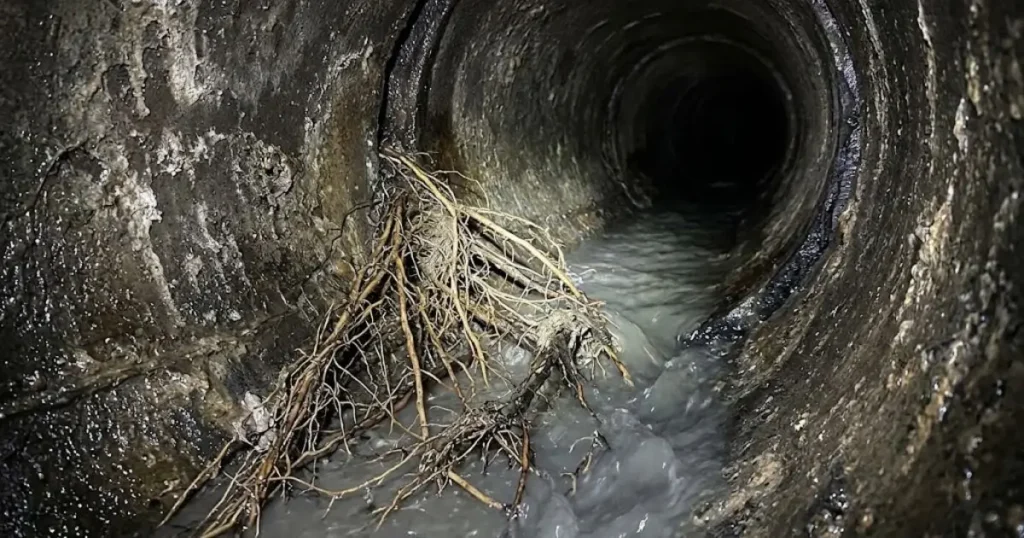
We’re not just looking for “a clog.” We’re looking for the reason it keeps coming back. Common findings:
- Tree roots coming in through joints or cracks
- Grease and sludge narrowing the pipe
- A belly, where a sagging section holds water
- Cracked, shifted, or separated joints
- Corroded cast iron, common in older Florida homes
- Collapsed clay, Orangeburg, or cast-iron pipe
- Wipes, feminine products, or construction debris
The camera shows what’s wrong inside the pipe. The locator shows where to dig. Together they take the guesswork out of it.
Signs You Might Have a Main Sewer Line Problem
One backed-up toilet is usually a toilet problem. Several fixtures at once usually aren’t. Call for an inspection if you notice:
- Slow drains in more than one room
- Toilets gurgling when the washer, shower, or sink drains
- Sewage coming up in a tub, shower, or floor drain
- A sewer smell inside the house or in the yard
- Unusually green, soggy, or sunken spots in the yard
- Clogs that return after snaking
How We Confirm a Sewer Leak
A camera is great at showing blockages and damage. It can’t always prove water is escaping the pipe. For that, plumbers may add one of these:
- Smoke testing: Harmless smoke is pushed through the system. Where it escapes, there may be a crack, bad joint, or vent defect.
- Dye testing: Colored dye shows where wastewater travels.
- Acoustic listening: Ground microphones pick up the sound of water escaping.
- Isolation testing: The line is tested in sections to narrow down the leak.
- Hydrostatic testing: Checks whether the system holds water the way it should.
Which one makes sense depends on whether you have a blockage, a broken pipe, a leaking joint, or groundwater getting in.
Matching the Repair to the Problem
| Grease, wipes, or roots | Snaking, hydro-jetting, root cutting | The pipe is still sound |
| One cracked section | Spot repair | Damage is limited and reachable |
| Leaks or minor cracks in a round, stable pipe | Trenchless lining | The pipe can hold a liner |
| Multiple cracks or heavy corrosion | Replacement | The pipe is failing along the run |
| Collapsed or badly deformed pipe | Pipe bursting or open-trench replacement | Lining isn’t safe or possible |
| Belly or poor slope | Section replacement or regrading | Standing water keeps causing clogs |
Spot repair or replacement? Choose a spot repair when the camera shows one isolated defect and the rest of the pipe is fine. Replacement makes sense when the pipe has collapsed, the cast iron is flaking, there are multiple breaks, the slope is badly off, or repairs haven’t stopped the backups.
If a company recommends a full replacement without running a camera first, get a second opinion.
Trenchless isn’t automatically cheaper. It can cost more per foot. It can still cost less overall when it saves you from tearing up a driveway, pool deck, or landscaping. It won’t work on a collapsed line or a major offset.
Sewer Line Repair Cost in Florida
Costs depend on the city, depth, access, and what’s sitting on top of the pipe: a driveway, slab, pool deck, or lawn. These are planning ranges, not quotes:
| Camera inspection | $125 – $500 |
| Drain cleaning or root removal | Often a few hundred dollars |
| Spot repair | About $2,500 – $4,500 |
| Traditional replacement | About $60 – $150 per foot |
| Trenchless lining or bursting | About $60 – $280 per foot |
| Full replacement | Commonly $3,000 – $15,000+ |
A good quote says what’s included: the camera inspection, locating, permits, excavation, pipe material, backfill, restoration, and a final camera check after the work.
Why Florida Sewer Lines Fail Differently
A national average price can mislead you here. Florida has its own set of problems:
- High water table: Groundwater seeps into cracked pipes.
- Sandy soil: Ground shifts and causes settling and bellies.
- Coastal air: Older cast iron can corrode faster in salty, humid conditions.
- Roots: Trees go after the moisture around sewer joints.
- Storms and flooding: Saturated ground exposes weak joints.
- Slab homes: Repairs under a slab mean breaking concrete, which adds cost and mess
If Sewage Is Backing Up Right Now
Call a licensed plumber immediately if sewage is entering the house, wastewater is pooling in the yard, or several fixtures stop draining at once. While you wait:
- Stop using water and don’t flush.
- Keep kids and pets away from the contaminated area.
- Skip the chemical drain cleaners.
- Take photos for insurance if it’s safe.
How to Choose a Sewer Line Company
Before you hire anyone, ask:
- Will you show me the camera video?
- Does the quote include locating the problem?
- Is this price for cleaning, repair, or replacement?
- What evidence supports the method you’re recommending?
- Are permits and restoration included?
- Will you camera-inspect the line after the repair?
A trustworthy company documents the diagnosis before it recommends a fix.
FAQ’s : How Do Plumbers Find a Sewer Line Problem?

David Reynolds
I’ve spent over 25 years working as a plumber all across Florida fixing burst pipes, water heaters, sewer issues, and everything in between. After years of being out in the field every day, I stepped back from the hands-on work but still wanted homeowners to get solid, reliable help. That’s why I started Home Fixer. Now I work with a trusted team of licensed and experienced plumbers so people can get the same kind of service I used to provide myself.