How to Unclog a Drain Safely

How to Unclog a Drain Safely starts with choosing the right method for the type of blockage. For a slow or blocked drain, start with the least invasive method: remove visible debris, plunge the drain correctly, and clean the P-trap if the blockage is close to the fixture. For a stubborn clog, a hand drain snake may help, but avoid forcing tools deeper into the pipe.
Avoid repeated chemical drain cleaners. They may not fix the underlying cause and can create safety risks if you later need to remove the trap or use a drain tool. If several fixtures are backing up, water appears in unusual places, or the clog keeps returning, submit a booking request for professional drain cleaning.
Request Drain Cleaning Service
Use our online form to describe the affected fixture, add your city or ZIP code, and upload photos if it is safe to do so. Our team will review your request during business hours and contact you to confirm availability.
Last reviewed: October 1, 2026
Reviewed by: Jacob Paul
Service areas: All of Florida
Quick answer: try these steps first
Follow this sequence before attempting a major repair:
- Remove visible debris. Use gloves or a small drain-removal tool to pull out hair, food, or buildup near the drain opening.
- Plunge the drain correctly. Use a cup-style sink plunger, create a seal, and plunge several times.
- Clean the P-trap. Place a bucket underneath the curved pipe beneath the sink, remove it carefully, clean it, and reconnect it securely.
- Use a hand drain snake. Feed it slowly into the drain and rotate it when you feel resistance.
- Test the drain. Run water and check whether it drains normally.
- Stop if the problem persists. Do not force a snake deeper or repeatedly use chemicals.
- Request professional service. Multiple slow fixtures, sewage odors, recurring clogs, and water backing up can signal a deeper drainage issue.
Identify the clog before choosing a method.
The fastest method depends on where the clog is and what caused it.
| Hair clog | Slow shower, tub, or bathroom-sink drainage | Remove visible hair; use a small drain snake | Pouring chemicals blindly |
| Grease or food buildup | Slow kitchen sink, odor, occasional backup | Plunge; clean P-trap | Adding more grease or food waste |
| Soap scum | Gradual slowdown, especially in bathroom sinks | Clean the stopper and drain opening | Assuming one treatment solves it permanently |
| Foreign object | Sudden blockage after something went down | Stop using the fixture; request help if it is not easily reachable | Pushing the object deeper |
| Main drain issue | Multiple fixtures slow or backing up | Stop using water; request professional help | Repeated plunging or chemical cleaners |
A single slow drain is often a localized issue. If a toilet, tub, and sink all back up together, the problem may be farther down the drainage system.
Method 1: Remove visible debris
Start here, especially for bathroom sinks and showers.
- Put on gloves.
- Remove the drain cover or stopper if it lifts out easily.
- Pull out hair, soap buildup, food debris, or other visible material.
- Use a paper towel or small drain-removal tool for buildup near the opening.
- Run water to test drainage.
- Clean and reinstall the drain cover.
This method is often enough for a hair clog near the surface.
Method 2: Use a plunger correctly
A plunger works best when it can create a seal over the drain.
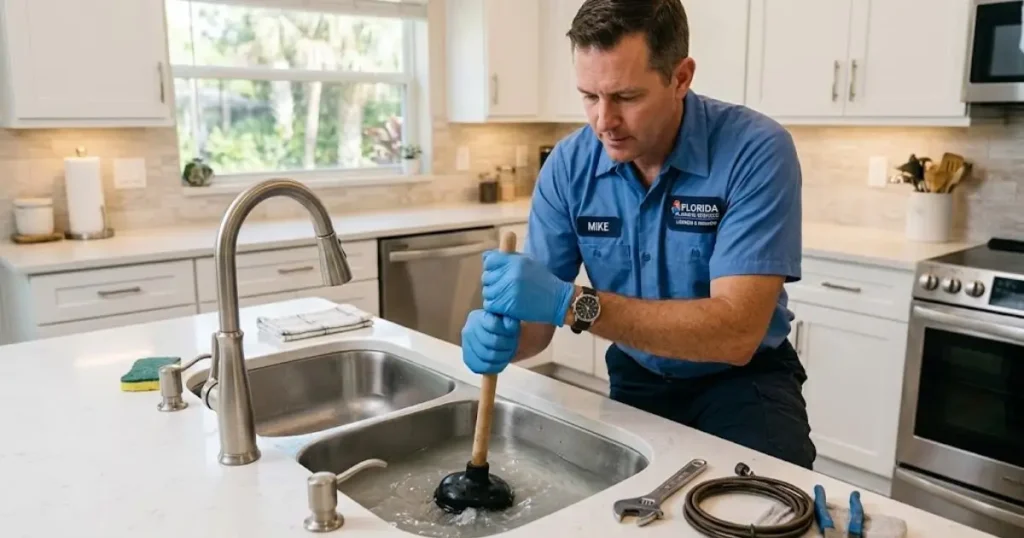
- Use a clean cup-style sink plunger, not a toilet plunger.
- Add enough water to cover the cup.
- Place the plunger directly over the drain.
- Seal the overflow opening in a bathroom sink with a wet cloth if necessary.
- If you have a double kitchen sink, block the other basin with a wet cloth.
- Push down and pull up firmly several times.
- Remove the plunger and run water.
- Repeat only a few times.
If water starts backing up in another fixture, stop plunging. That can indicate a larger drainage problem.
Method 3: Clean the P-trap
The P-trap is the curved pipe under a sink. It often traps hair, grease, food particles, and debris.
- Put on gloves.
- Place a bucket directly below the P-trap.
- Loosen the slip nuts carefully.
- Remove the trap slowly and empty the contents into the bucket.
- Clean the inside of the trap.
- Check washers and connections for wear.
- Reinstall the trap securely.
- Run water and check for leaks.
Important: Do not remove the P-trap if chemical drain cleaner was recently used. Residual chemicals can be hazardous.
Method 4: Use a hand drain snake
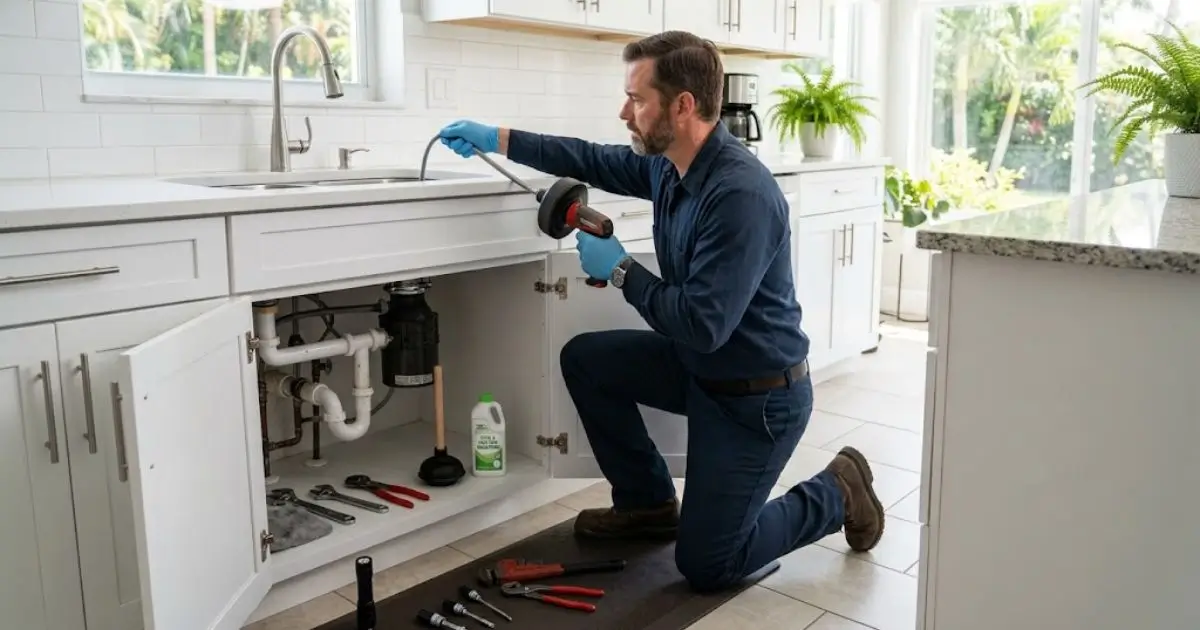
A small hand auger or drain snake can reach clogs beyond a plunger.
- Insert the snake slowly into the drain.
- Stop when you feel resistance.
- Rotate the handle to hook or break up the clog.
- Pull the snake back slowly.
- Clean off debris.
- Run water to test drainage.
- Repeat only if the drain improves.
Do not force the snake. Aggressive use can push the clog deeper, scratch pipes, or damage older plumbing.
Method 5: Try a low-risk maintenance method
For light buildup, some homeowners use hot tap water or a baking soda and vinegar treatment. These methods may help with minor residue, but they are not reliable fixes for a compacted or deep clog.
If you choose to try it:
- Remove standing water if possible.
- Pour baking soda into the drain.
- Add white vinegar.
- Let it sit for 15–30 minutes.
- Flush with hot tap water—not boiling water—especially if you are unsure about your pipe material.
Do not rely on this method for:
- A completely blocked drain.
- Multiple slow drains.
- A sewer backup.
- Recurring clogs.
- Water backing up in another fixture.
What not to do
Avoid these common mistakes:
- Do not pour chemical drain cleaner repeatedly into a blocked drain.
- Do not mix cleaning products or chemicals.
- Do not use a toilet plunger in a sink or vice versa.
- Do not force a wire hanger deep into the drain.
- Do not disassemble plumbing if you are unsure how to reconnect it correctly.
- Do not continue using water during a suspected main-line backup.
- Do not ignore water stains, leaks, gurgling sounds, or sewage odors.
- Do not assume a clog is gone because water starts draining again.
A drain can improve temporarily while grease, roots, scale, pipe damage, or a deeper obstruction remains.
When to request professional drain cleaning
Request professional help if:
- Several drains are slow at the same time.
- Water backs up in a toilet, shower, tub, or floor drain when another fixture runs.
- The drain clears but clogs again within days.
- There is a persistent sewage smell.
- Water is leaking under a sink or around pipes.
- You hear recurring gurgling sounds.
- Safe DIY methods do not improve the drain.
- You suspect grease buildup, root intrusion, pipe damage, or a sewer-line issue.
A simple clogged fixture and a sewer-line problem can have similar early symptoms. A professional diagnosis can prevent unnecessary repairs or repeated attempts.
Read our guide: What Is Considered a Plumbing Emergency in Florida?
What a professional drain-cleaning visit may include
The right service depends on the diagnosis.
| Drain cable or auger | A localized clog beyond a plunger’s reach | Hair, grease, food debris, or buildup |
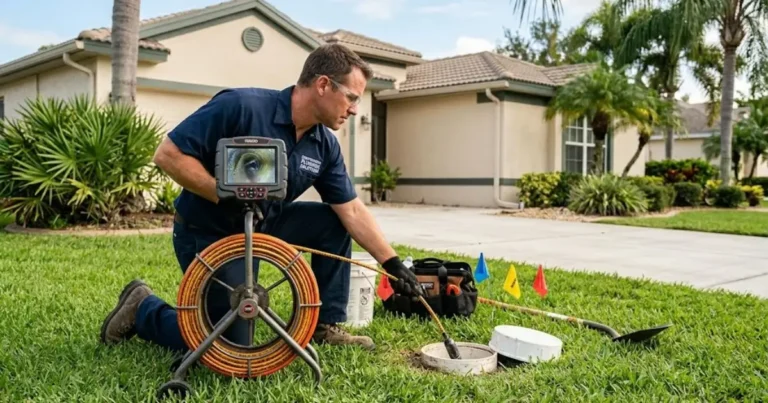
| Drain camera inspection | Recurring or unclear clogs | Locating the blockage and identifying pipe condition |
| Hydro jetting | Appropriate recurring buildup or grease-related issues | Cleaning pipe walls when conditions allow |
| Sewer-line diagnosis | Multi-fixture backups or recurring main-line problems | Root intrusion, pipe damage, or sewer-line issues |
A trustworthy provider should explain the diagnosis before recommending a larger repair.
How to prevent future drain clogs
- Use drain strainers in kitchen sinks, bathroom sinks, showers, and tubs.
- Do not pour cooking oil, grease, or fat down the drain.
- Wipe greasy pans with a paper towel before washing.
- Keep coffee grounds, eggshells, fibrous food scraps, and starchy foods out of the drain.
- Do not flush wipes, hygiene products, cotton swabs, or paper towels.
- Remove hair from shower and bathroom-sink drains regularly.
- Run water after using a garbage disposal, where applicable.
- Treat slow drains early instead of waiting for a complete blockage.
Real Issue and Fix: Tallahassee Kitchen Sink Clog
Date: October 1, 2026
Location: Tallahassee, FL
Issue reported: Kitchen sink draining slowly for [number] days
What the customer tried first: Plunger and hot water
Technician: Home Fixer Expert plumber
Diagnosis: Heavy grease and sludge buildup in the 1½-inch kitchen drain line
Fix: Removed and cleaned the P-trap, cleared the line with a General Super-Vee drain snake, reinstalled the trap, checked for leaks, and ran a full flow test.
Prevention advice: Wipe grease from pans before washing; use a sink strainer; avoid pouring cooking oil down the drain
Outcome: Normal drainage restored; no chemical drain cleaner used
Frequently Asked Questions

David Reynolds
I’ve spent over 25 years working as a plumber all across Florida fixing burst pipes, water heaters, sewer issues, and everything in between. After years of being out in the field every day, I stepped back from the hands-on work but still wanted homeowners to get solid, reliable help. That’s why I started Home Fixer. Now I work with a trusted team of licensed and experienced plumbers so people can get the same kind of service I used to provide myself.