What to Do When You Have a Plumbing Emergency in Florida

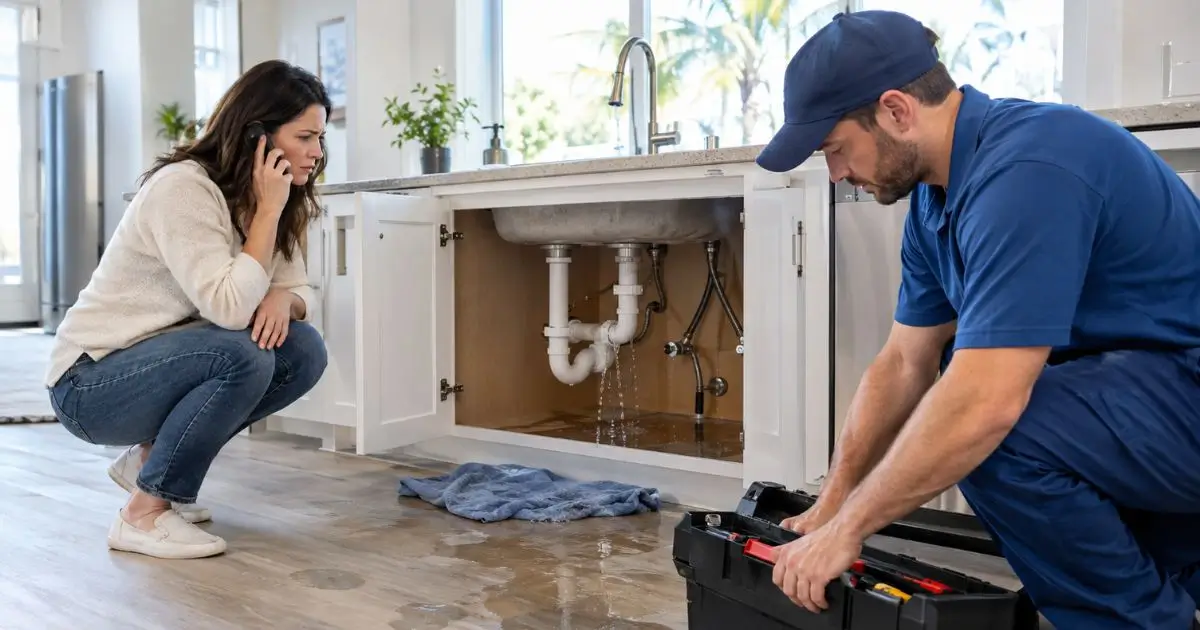
A plumbing emergency can damage floors, walls, and electrical systems in minutes. If you have a burst pipe, sewage backup, major leak, overflowing toilet, water-heater failure, or no water, you need to know what to do when you have a plumbing emergency — and act quickly, but only when it is safe.
What to Do When You Have a Plumbing Emergency: 5 Steps
- Stay calm and know your shut-off valves
Locate the main water shut-off and the individual valves for toilets, sinks, washing machines, and other fixtures before an emergency happens. - Shut off the water immediately
Turn off the nearest fixture valve. If water is spreading fast, shut off the main supply. - Call an emergency plumber
Tell them exactly what is happening — whether water is still flowing, sewage is backing up, or multiple fixtures are affected. - Clean up only if it is safe
Move furniture and electronics out of the water path. Use towels, buckets, or a wet/dry vacuum. Never enter standing water near electrical outlets or panels. - Document the damage
Once everyone is safe and the water is stopped, take clear photos and videos for insurance.
What Counts as a Plumbing Emergency?
Call an emergency plumber now if you have:
- A burst pipe or fast-moving leak
- Water coming through a ceiling, wall, or floor
- Sewage backing up through a drain, toilet, tub, or shower
- A toilet overflowing that will not stop
- A water heater with a significant or uncontrolled leak
- Sudden loss of water throughout the home
- Multiple fixtures backing up at the same time
- A suspected gas leak near a water heater or gas appliance
- Water near electrical outlets, wiring, or the panel
- Water damage that is actively spreading
Learn more about our Emergency Plumbing Services in Florida
A slow drip under one sink or a single slow drain can usually wait if it is contained and not causing damage. The difference is simple: is the problem contained, or is it getting worse?
Burst Pipe
- Turn off the main water supply.
- Open nearby faucets to relieve remaining pressure.
- Move belongings out of the water path if safe.
- Call an emergency plumber.
- Arrange professional drying if drywall, flooring, or insulation is soaked.
Do not cut into walls or rely on temporary patches.
Overflowing Toilet
- Do not flush again.
- Close the flapper and turn the toilet shut-off valve clockwise.
- Keep people and pets away from wastewater.
- Move nearby items if safe.
- Call a plumber if it will not stop, sewage is present, or multiple fixtures are affected.
Do not use chemical drain cleaners.
Sewer Backup
- Stop using all water fixtures.
- Keep children and pets away.
- Do not use chemical drain cleaners.
- Call an emergency plumber for diagnosis.
- Arrange professional cleanup if sewage reached floors or belongings.
Several slow or gurgling drains at once usually means a main sewer line problem.
Leaking Water Heater
- Turn off the cold-water supply to the heater if safe.
- For electric units, shut off the breaker only if the area is completely dry.
- For gas units, leave immediately if you smell gas. Do not operate switches or create sparks.
- Call an emergency plumber.
A large tank leak often means the unit needs replacement.
Water Coming Through the Ceiling
- Keep people away from the leak.
- Move valuables if safe.
- Shut off the water to the source or the main supply.
- Stay clear of a bulging or sagging ceiling.
- Call a plumber to locate the source.
Do not stand under a water-filled ceiling.
Gas Smell Near a Water Heater
- Do not operate switches, lights, appliances, or phones inside.
- Leave the building immediately.
- Call the gas utility or emergency services from outside.
- Do not re-enter until professionals say it is safe.
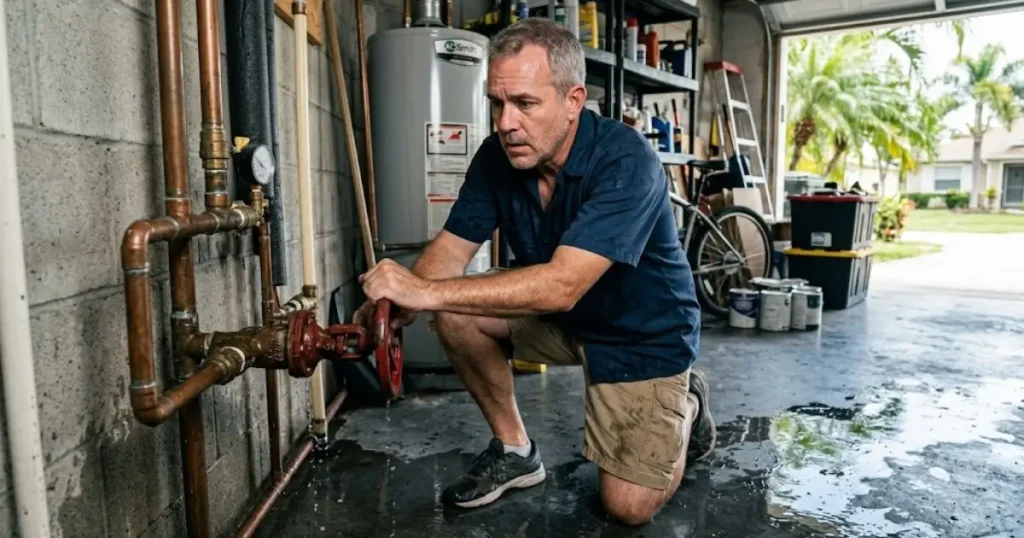
Where Is the Main Water Shutoff Valve?
Every household member should know this before an emergency.
In Florida homes it is commonly found:
- Near the water meter
- Where the water service line enters the home
- In a garage, utility room, or mechanical closet
- Near the water heater
- Inside or near an exterior meter box
Turn the valve clockwise slowly (or the lever perpendicular to the pipe). Ask a plumber to show you during a regular visit if you are unsure. Never force a stuck valve.
Florida Plumbing Emergencies: Why Fast Action Matters
Florida’s high humidity, heavy rain, slab foundations, aging pipes, and tree roots let water travel behind walls, under floors, and beneath slabs long before the full damage shows. The sooner an active leak or backup is stopped, the less damage you face.
What Home Fixer Technicians Actually See
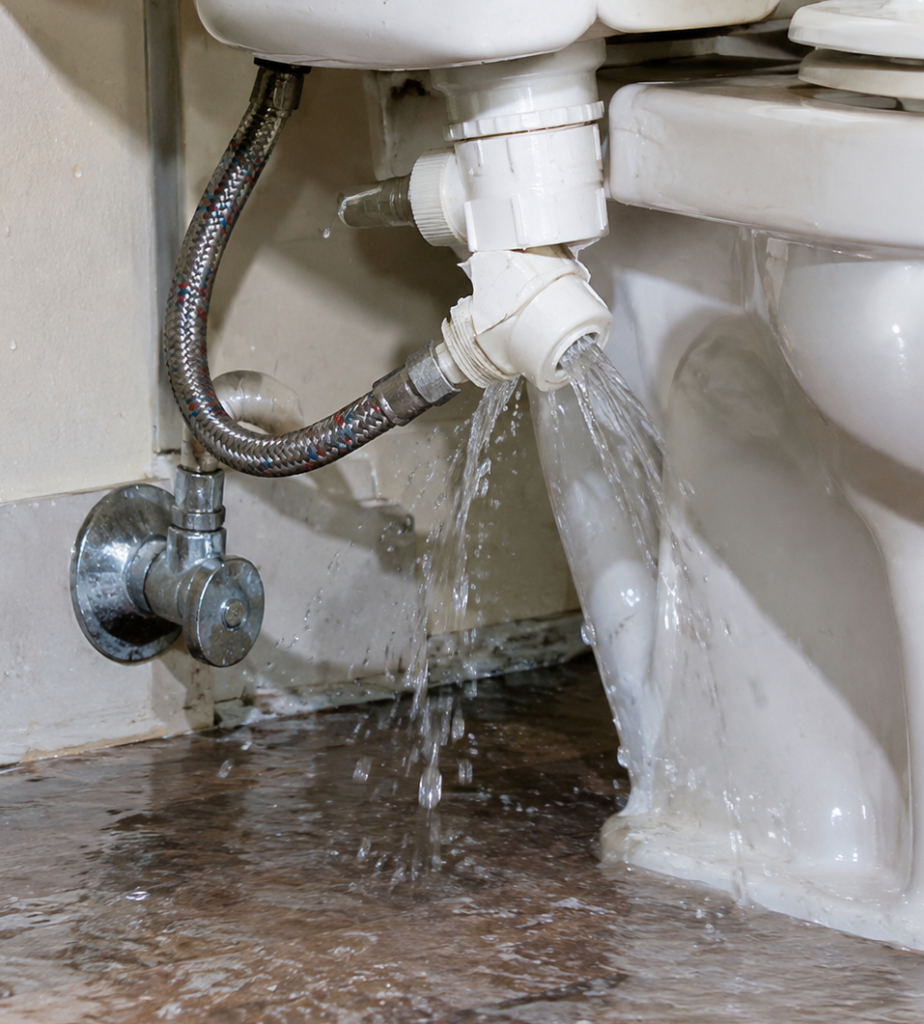
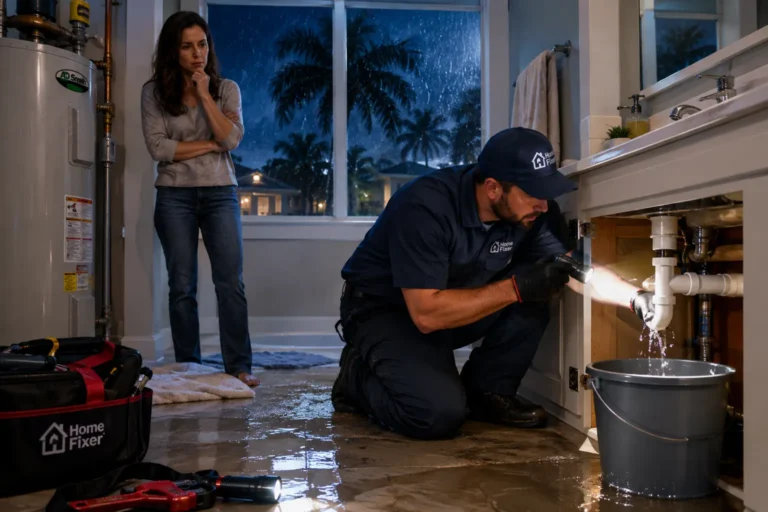
On September 20, 2026, a homeowner in Miami installed a $30 plastic bidet attachment from Amazon for his sister the night before she arrived. He overtightened the cheap plastic fitting. During the night the water pressure spiked, the fitting failed, and water poured from the ceiling.
Our team received the emergency call at 2:15 a.m. By the time we arrived, roughly 500 gallons had already flooded the house. The ceiling, walls, and hardwood floors were ruined. Total damage reached $17,000, plus mold remediation and hotel costs.
A $30 part and one overtightened fitting turned into a five-figure restoration job because the water ran for hours.
What Not to Do
- Do not keep using toilets, showers, or sinks during a sewer backup
- Do not use chemical drain cleaners on major blockages
- Do not touch electrical equipment near water
- Do not enter standing water if electricity may be involved
- Do not use open flames if you smell gas
- Do not ignore growing water stains or sagging ceilings
- Do not assume a leak is fixed just because visible water stopped
When a Plumbing Problem Can Wait
These can usually be scheduled during normal hours if nothing is actively getting worse:
- A dripping faucet that can be isolated
- One slow drain
- A running toilet that can be shut off
- A minor under-sink leak that has been stopped
- A single clogged sink that does not affect other drains
If you are unsure, call and describe exactly what you see.
How to Prepare for the Next Emergency
- Locate and label the main water shutoff
- Make sure everyone in the house knows how to turn it off
- Keep your emergency plumber’s number in your phone
- Check supply lines, valves, and appliance hoses regularly
- Replace old washing-machine hoses
- Never flush wipes, grease, or paper towels
- Address slow drains, high water bills, and water stains early
When in Doubt, Call Home Fixer
Not sure if it can wait until morning? Call and tell us what is happening. We will help you judge the urgency.
Our licensed Florida plumbers handle active leaks, slab leaks, sewer backups, water-heater failures, and other problems that get more expensive the longer they sit.
Our approach is simple: stop the immediate problem, find the real cause, and fix it properly.
If water is spreading, sewage is backing up, or you smell gas — do not wait.
The 7-day clock starts only after the landlord receives written notice. Always document the notice and keep copies.
FAQs: What to Do When You Have a Plumbing Emergency
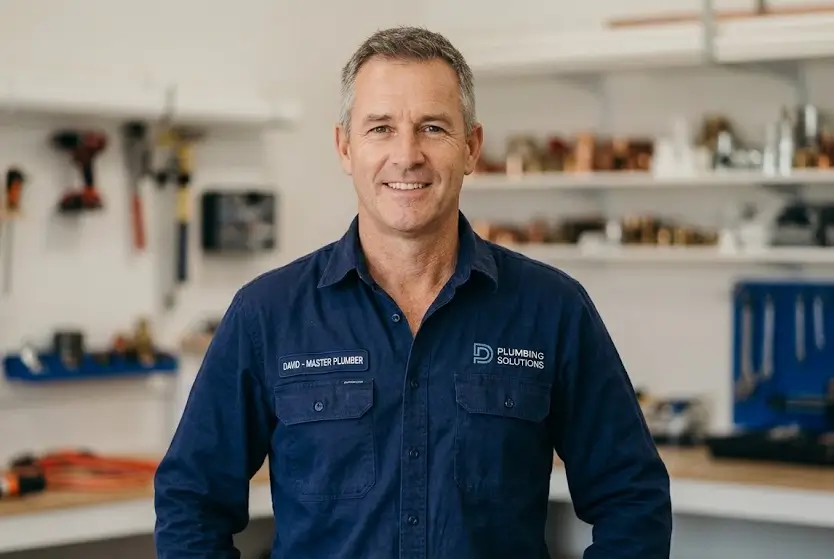
David Reynolds
I’ve spent over 25 years working as a plumber all across Florida fixing burst pipes, water heaters, sewer issues, and everything in between. After years of being out in the field every day, I stepped back from the hands-on work but still wanted homeowners to get solid, reliable help. That’s why I started Home Fixer. Now I work with a trusted team of licensed and experienced plumbers so people can get the same kind of service I used to provide myself.