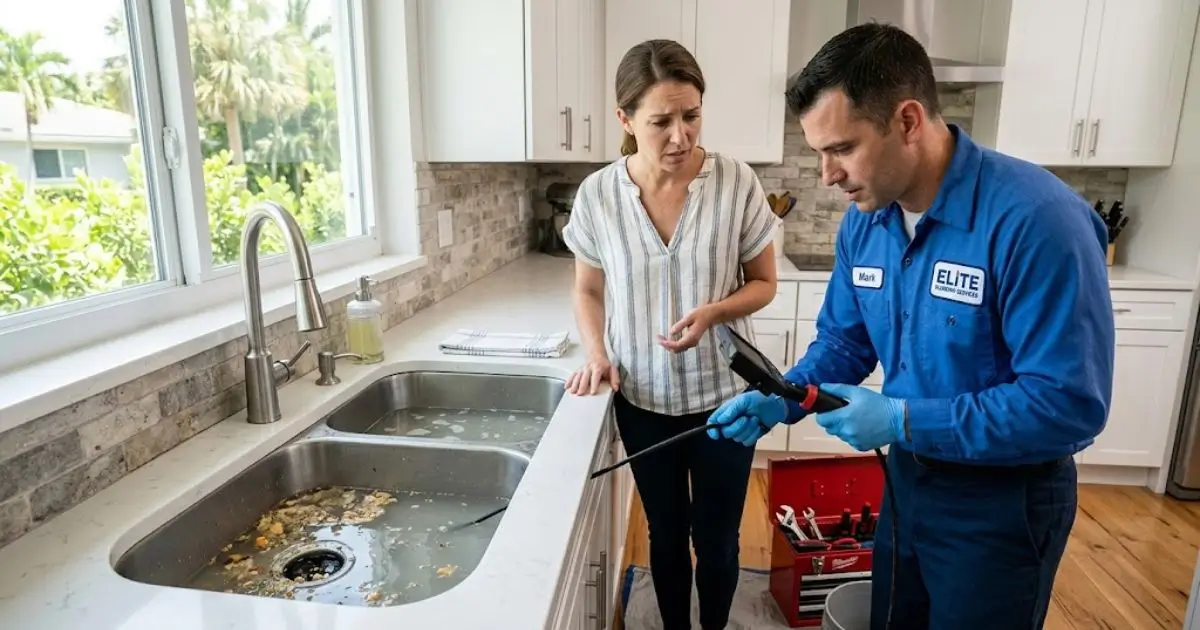
Why Does My Drain Keep Clogging? Causes and Solutions for Florida Homes

Why Does My Drain Keep Clogging? A drain keeps clogging when a blockage is only partly removed or a deeper pipe problem remains. In Florida, the most common causes are grease, hair, soap residue, food waste, mineral scale, tree roots, wipes, and damaged pipes.
Quick Answer
Home Fixer’s team helps homeowners determine whether the problem is limited to one fixture or connected to a branch drain, main drain, or sewer line.
The most common clogged drain causes are grease, hair, food waste, soap buildup, foreign objects, mineral deposits, tree roots, and damaged or poorly sloped pipes.
One slow sink usually points to a local blockage. If several fixtures back up together, the problem is often in the main drain or sewer line.
When the same drain blocks again after cleaning, repeating the same treatment usually gives only temporary relief. The line often needs a camera inspection or a different cleaning method.
Why Does My Drain Keep Clogging?
1. The blockage was only partly removed
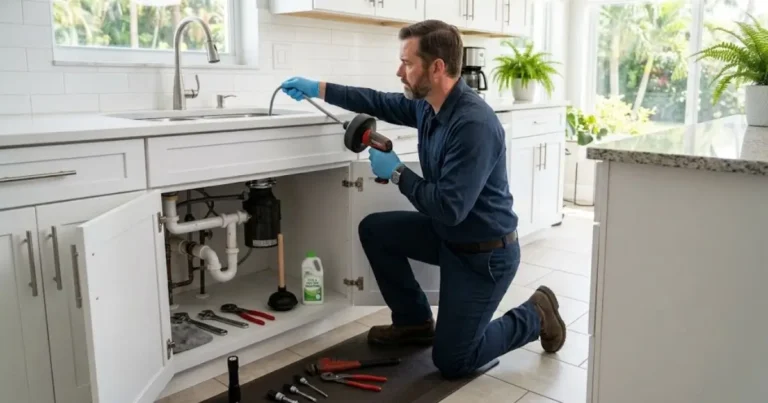
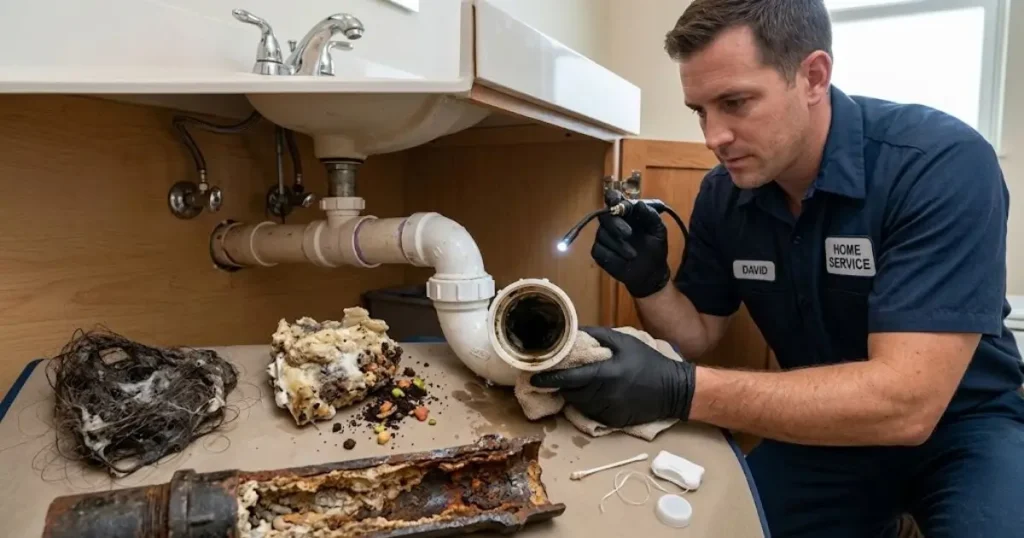
A drain snake can open a narrow path through grease or hair without cleaning the pipe walls. Water flows again, but the remaining buildup quickly catches new debris.
In the field we see this often: the drain works for a few days, then slows again. When that happens, the line needs to be cleaned beyond the first few feet.
Professional drain cleaning services in Florida
2. Grease and food are blocking the kitchen line
Grease flows when hot, then cools and sticks to the pipe walls. Food particles, coffee grounds, rice, and flour collect on that coating and slowly close the line.
In Florida kitchens this is one of the most frequent recurring issues we handle. The warm climate keeps grease soft longer, so it travels farther down the line before hardening. Once it hardens, it becomes a sticky base for everything else that goes down the sink.
Prevention:
- Never pour grease or oil into the sink
- Scrape plates before washing
- Use a sink strainer
- Keep coffee grounds and flour out of the drain
3. Hair and soap are blocking the bathroom drain
Hair mixes with soap residue and mineral deposits, forming a dense clog that is hard to remove.
Florida’s hard water makes this worse. Minerals in the water bond with soap and lock hair in place. A plunger or small hand auger can clear an early clog, but if it returns within weeks, the restriction is usually deeper in the branch line.
4. Mineral scale is narrowing the pipe
Mineral deposits make the inside of the pipe rough and narrow. Hair, soap, and grease then stick more easily. Gradually worsening flow is a classic sign of scale buildup rather than a single foreign object.
5. Tree roots have entered the sewer line
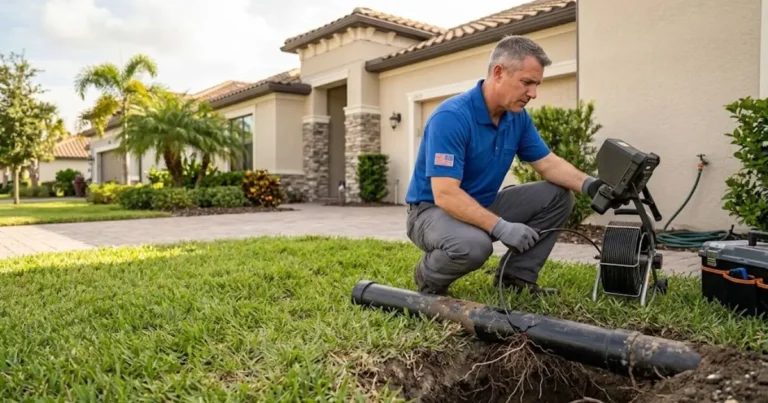
Roots seek moisture and enter underground pipes through cracks or loose joints. This is one of the most common causes of recurring main-line clogs across Florida, especially after heavy rain.
Warning signs:
- Several fixtures draining slowly
- A toilet gurgling when another fixture runs
- A main drain backing up repeatedly
- Sewage odors near a cleanout or yard
- A blockage returning soon after snaking
- Problems getting worse after rain
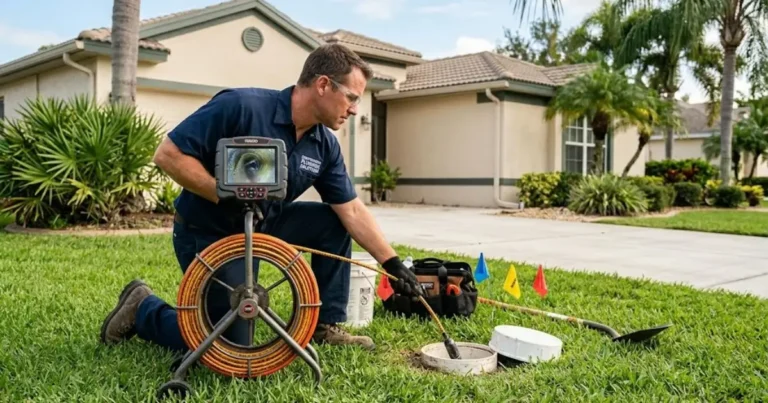
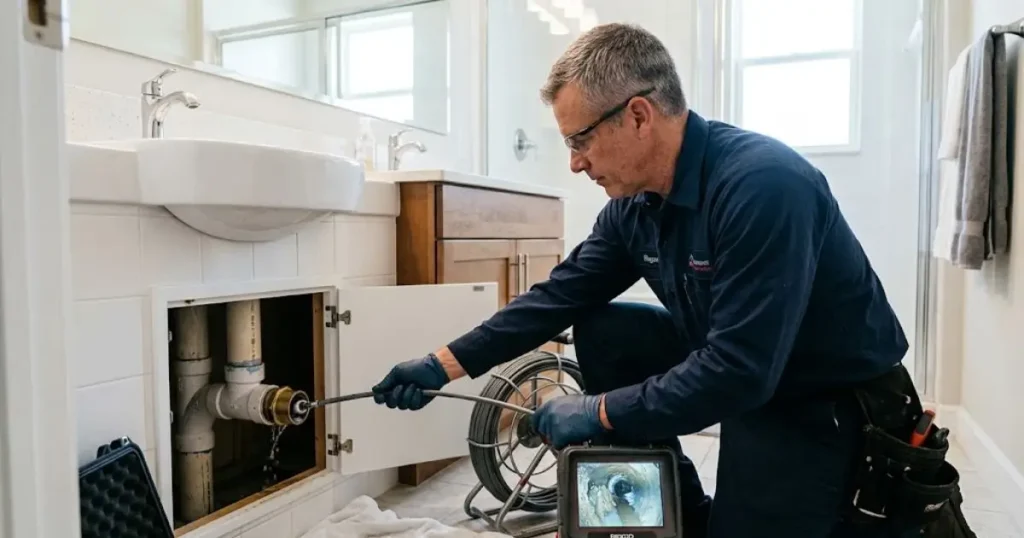
Root cutting restores flow temporarily, but it does not close the opening where the roots entered. A sewer camera shows whether the line needs further cleaning, root treatment, or repair.
6. Wipes and foreign objects are stuck in the line
Only human waste and toilet paper should be flushed. The EPA advises against flushing disinfecting wipes and other non-flushable products because they can damage household plumbing and sewer systems.
Other common foreign objects include dental floss, cotton swabs, paper towels, and cat litter. Dispose of them in the trash.
7. The pipe is damaged or poorly sloped
Repeated clogs can also mean a cracked pipe, collapsed section, corroded cast iron, or a low spot where debris collects. A snake may pass through without revealing the defect. A camera inspection is the only reliable way to confirm the real condition of the line.
Why Does My Sink Keep Clogging?
Kitchen sinks usually collect grease and food. Bathroom sinks collect hair, toothpaste, and soap.
Try these steps first:
- Remove and clean the stopper
- Clear visible debris
- Plunge with enough water to cover the cup
- Use a small hand auger if you know how
- Stop using the sink if water backs up into another fixture
Do not mix chemical drain cleaners. Tell the plumber if you used one.
How to Stop a Drain from Clogging
Kitchen
Keep grease, oil, coffee grounds, rice, and flour out of the drain. Use a strainer and scrape plates before washing.
Bathroom
Install hair screens and clean them weekly. Never flush wipes, floss, or paper towels.
Whole-house
Watch for gurgling, sewage odors, and multiple slow drains. Do not wait for a full backup if the same clog returns. A camera inspection is often the fastest way to find the real cause.
One Slow Drain or a Main-Line Problem?
| One sink drains slowly | Local fixture or branch blockage | Check stopper and plunge |
| Shower and tub clog together | Shared bathroom branch | Arrange branch-line diagnosis |
| Several fixtures back up | Main drain or sewer blockage | Stop using water and call a pro |
| Clog returns after snaking | Buildup, roots, or pipe damage | Request camera inspection |
| Backup appears after rain | Roots or damaged sewer line | Inspect the sewer lateral |
Home Fixer Recent Job
In October 2026, Home Fixer’s team responded to a homeowner in Florida City whose kitchen drain kept clogging every few days.
The technician found heavy grease and food buildup in the drain line. After removing the P-trap and clearing the restriction with a professional drain snake, the line was fully cleaned, the trap was reinstalled, and full flow was restored. No chemical cleaners were used.
The homeowner was advised to stop pouring grease down the sink and to use a strainer to prevent the same problem from returning.
What Home Fixer Sees Most Often in Florida
| Simple fixture clog (sink/shower) | $200 – $450 | Often cleared with a snake |
| Kitchen grease buildup | $250 – $600 | May need more thorough cleaning |
| Recurring clog after recent snaking | $300 – $700 | Usually needs deeper cleaning or camera |
| Main-line or root intrusion | $450 – $1,200+ | Camera inspection often recommended first |
| Camera inspection | $250 – $450 | Shows exact cause before major work |
When to Call Home Fixer
Call when:
- The same drain keeps clogging after cleaning
- Several fixtures back up together
- Wastewater appears in a tub, shower, or floor drain
- A toilet gurgles when another fixture runs
- You notice sewage odors
- You used chemical cleaner and the blockage remains
- You suspect roots or pipe damage
A technician will explain the cause, the recommended method, and whether a camera inspection is needed before any major work.
Typical Cost Ranges for Recurring Drain Issues in Florida (2026)
| Simple fixture clog (sink/shower) | $200 – $450 | Often cleared with a snake |
| Kitchen grease buildup | $250 – $600 | May need more thorough cleaning |
| Recurring clog after recent snaking | $300 – $700 | Usually needs deeper cleaning or camera |
| Main-line or root intrusion | $450 – $1,200+ | Camera inspection often recommended first |
| Camera inspection | $250 – $450 | Shows exact cause before major work |
Frequently asked questions

David Reynolds
I’ve spent over 25 years working as a plumber all across Florida fixing burst pipes, water heaters, sewer issues, and everything in between. After years of being out in the field every day, I stepped back from the hands-on work but still wanted homeowners to get solid, reliable help. That’s why I started Home Fixer. Now I work with a trusted team of licensed and experienced plumbers so people can get the same kind of service I used to provide myself.